

Supplement basics · 8 min
How to read a dog supplement label
What active ingredients, analytical constituents and serving guides actually tell you.
Start with the daily serving—not the ingredient headline
An ingredient name may sound impressive while the actual daily amount is unclear. Find the recommended serving for your dog’s weight, then read the quantity of each active ingredient in that serving. If quantities are given per kilogram of product, you may need the chew weight to calculate the daily intake.
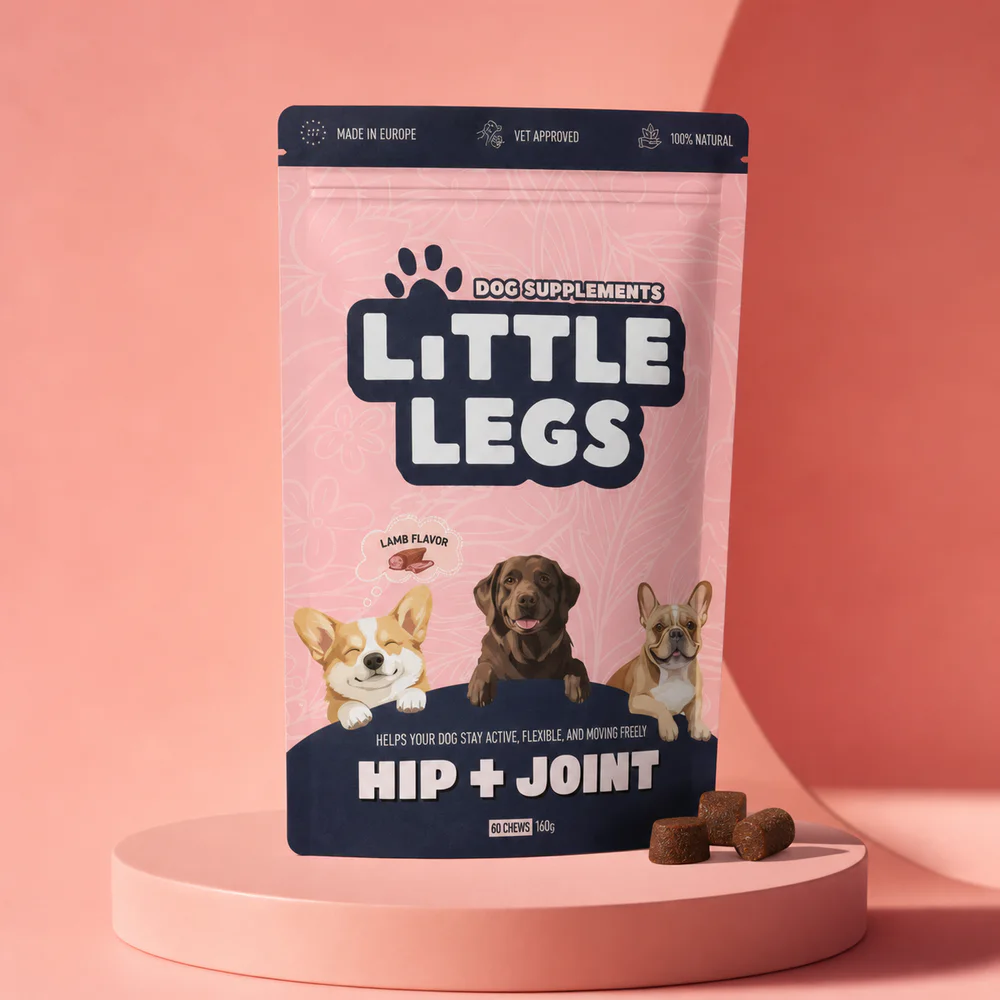
Compare products on the same basis: amount per day for the same dog, not amount per chew or size of the bag. A 60-chew pouch lasts 60 days only for a dog receiving one chew daily.
Know what each panel is telling you
“Composition” or “ingredients” lists what the product is made from, usually in descending order by weight. “Additives” identifies certain nutritional, technological or sensory additions. “Analytical constituents” reports categories such as protein, fat, fibre, ash and moisture; it is not a list of active ingredients.
- Product purpose and species: confirm it is intended for dogs
- Net quantity and chew count: use both to understand pack size
- Batch and best-before details: important for traceability
- Storage directions: heat and moisture can affect quality
- Manufacturer or responsible business: there should be a way to ask questions
Treat claims as questions to investigate
Words such as natural, premium, vet formulated or advanced do not tell you the dose, evidence or suitability for your dog. Look for specific, measured language and for boundaries: a responsible supplement should not promise to cure disease or replace veterinary treatment.
“Proprietary blend” can make comparison difficult when individual amounts are hidden. More ingredients, higher percentages and dramatic before-and-after language are not substitutes for a clear formula and realistic use instructions.
Calculate value by daily use
Divide the number of chews by your dog’s daily serving to find days per pack. Then divide the pack price by those days. Subscription discounts matter only after you know the formula fits, and cancellation or pause terms should be easy to find.
Also check whether the serving changes during an introductory period. Do not double a serving to chase a quicker result. If the label is ambiguous, ask the company in writing before buying.
Safety information belongs in the decision
Check minimum age, pregnancy guidance, maximum serving and warnings. Ask a veterinarian before combining a supplement with prescribed medicine or using it for a dog with ongoing illness. Keep the original package and batch number if a reaction occurs, stop the new product, and seek advice for significant symptoms.
Frequently asked questions
What does “analytical constituents” mean?
It is a standard nutrient analysis—often protein, fat, fibre, ash and moisture. It does not by itself show the amount of every active ingredient.
Is a longer ingredient list better?
No. Formula quality depends on purpose, amounts, suitability, manufacturing and clear guidance. Extra ingredients can make a label harder to assess.
Can I compare percentages between products?
Only if the basis is the same. Percent of product, milligrams per chew and milligrams per daily serving are different. Convert to the amount your dog receives each day.
Evidence
Sources and scope
These references support the article’s general health, behaviour or nutrition guidance. They do not establish the efficacy of any Little Legs product, and our practical routines are editorial guidance—not an individual treatment plan.
Choose by need, not hype
Compare the formulas before deciding.
This guide is education, not a product recommendation. Compare intended use, full ingredients, daily serving and safety notes across all three formulas.